
IT started with the thunder of US and Israeli bombers over Tehran. Within days, it had reached the fuel pumps of Lagos, the minibus ranks of Harare, and the farm supply stores of rural Kenya. The US-Israeli war on Iran – launched with precision strikes on 28 February 2026 – has delivered Africa’s most devastating energy shock in half a century, and the continent did not fire a single shot.
Iran’s response to the joint US-Israeli assault was swift and strategically devastating. Tehran moved to close the Strait of Hormuz – the narrow waterway between Iran and Oman through which approximately 20 million barrels of crude oil and oil products pass every day, alongside roughly one-fifth of the world’s liquefied natural gas trade. The closure triggered what the International Energy Agency has since characterised as the largest supply disruption in the history of the global oil market.
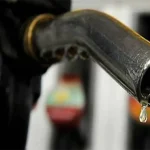
The consequences for Africa have been immediate, cascading and, for millions of people already living on the margins, potentially catastrophic. Fuel prices have surged across the continent. Transport costs have climbed. Food prices are following. And governments – most of them ill-equipped to absorb an external shock of this magnitude – are scrambling for answers.
THE STRAIT THAT STRANGLED A CONTINENT
The Strait of Hormuz has always been described in geopolitical briefings as a chokepoint. For Africa, that metaphor has never been more literal. The continent’s fuel import dependency on Middle Eastern supply chains means that what happens in a narrow strip of water between Iran and Oman reverberates, within weeks, at the petrol station in Accra, the matatu terminus in Nairobi, and the taxi rank outside Park Station in Johannesburg.
Brent crude prices surged by more than 55 percent in the weeks following the opening strikes on Iran, pushing the international benchmark to above $112 per barrel and threatening to climb higher. Goldman Sachs analysts warned of a potential breach of the $150 mark in a worst-case scenario. For oil importers – the majority of African nations – every dollar increase per barrel translates directly into fiscal pressure, currency depreciation, rising inflation, and higher costs for every commodity that moves by truck, bus, or boat.
The Centre for Global Development listed Angola, Ethiopia, Senegal, Zambia, Egypt and South Africa among the most exposed economies globally, citing their dependence on fuel imports, existing public debt levels, and the fragility of their foreign exchange reserves as factors that leave them acutely vulnerable to precisely this kind of shock.
| KEY ECONOMIC INDICATORS — OIL SHOCK AT A GLANCE Brent crude price (pre-war): ±$60–65/barrel Brent crude price (March 2026): $112–120/barrel US crude price surge since 28 Feb 2026: +49% Global oil supply disrupted via Strait of Hormuz: ±20% IEA classification: ‘Largest supply disruption in the history of the global oil market’ Diesel/jet fuel price increase: $160–$200/barrel premium |
COUNTRY BY COUNTRY: THE HUMAN TOLL
In Nigeria, Africa’s largest oil producer, the irony is bitter. The country that sits atop enormous hydrocarbon reserves still lacks the refining capacity to convert crude into the fuel its citizens need. Retail petrol prices in Lagos hit 1,350 naira per litre – a nearly 35 percent jump since the start of the Iran war – wiping out the daily earnings of taxi drivers, traders and informal workers who make up the backbone of the urban economy. Nigeria continues to import refined petroleum products, primarily from Europe, because its domestic refinery infrastructure has for decades been corroded by mismanagement and underinvestment.
In a partial reprieve, the Dangote refinery – the continent’s largest, now operating at full capacity – announced the completion of 12 shipments of refined petroleum products to the Ivory Coast, Cameroon, Tanzania, Ghana and Togo. It is the first intra-African distribution at that scale. Lagos-based oil analyst Olufola Wusu noted that the refinery has the capacity to meet some regional needs, but cautioned that any disruption to its crude oil supply or a slowdown in its planned expansion could rapidly negate those gains.
In Kenya, where all petroleum imports originate from the Middle East – principally the United Arab Emirates – the crisis has not remained an abstraction for long. Around 20 percent of the country’s petrol stations reported shortages as panic buying set in, even as Energy Minister Opiyo Wandayi urged citizens to remain calm. The damage has gone well beyond the pump: Kenya’s flower industry, which exports hundreds of thousands of stems daily and is a significant foreign exchange earner, reported losses exceeding $4.2 million over just three weeks as shipping disruptions and reduced Middle Eastern demand decimated orders. One farm manager described discarding nearly half of the day’s harvest.
Uganda’s position was even more precarious. The landlocked East African nation, entirely dependent on fuel trucked in from the Kenyan coast at Mombasa, saw its fuel stocks projected to last a matter of weeks. The double vulnerability of both distance from port and dependence on a supply chain already under severe strain underscores Uganda’s exposure in a way that few policy frameworks had anticipated.
In Zimbabwe, where economic hardship is already layered and chronic, health workers took to the streets to demand wage increases as transport fares climbed sharply. The government announced plans to increase ethanol blending in fuel from the current 5 percent to 20 percent – a desperate measure that experts warned could damage engines and increase vehicle emissions. For Harare resident Washington Nyakarize, an informal cellphone trader, the arithmetic was brutal: higher fare peaks meant he could no longer afford to commute to his spot in the Central Business District during morning rush hours without cutting too deeply into his day’s earnings.
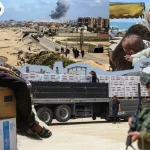
In South Sudan, electricity rationing has begun in the capital, Juba, with the main distributor, Jedco, announcing daily rotational power cuts as a direct consequence of the Iran war’s impact on energy reserves. In one of the worst-affected areas of the city, residents described power going off at 4 pm and not returning until 4 am – a 12-hour daily blackout paralysing businesses, clinics, and households alike.
Egypt, which increased fuel prices by some 17 percent within a week of the war starting, ordered malls, shops and cafes to close by 9 pm on weekdays. President Abdel Fattah el-Sisi described his country’s economy as being in a ‘state of near-emergency.’ The Egyptian pound came under renewed pressure, compounding the burden on an economy that is both a major oil importer and heavily dependent on foreign currency flows that are now under strain — from remittances, tourism and the Suez Canal alike.
“Diesel is the backbone of Africa’s freight and agricultural economy. Trucking costs have started climbing, and that will feed into everything — from flour to fertiliser.”
energy economist
FOOD SECURITY: THE SECOND WAVE OF DAMAGE
Analysts and agricultural economists are warning that the fuel shock is only the first round of damage. The second wave — food price inflation — is already beginning and will intensify in the months ahead.
The connection is direct and well-established: diesel powers the trucks that move grain from field to mill, the generators that run cold chains, the irrigation pumps that water crops, and the farm machinery that harvests them. When diesel prices surge, food production and distribution costs surge with them. And in Africa, where food import bills are already substantial and local agricultural infrastructure is fragile, this second-order impact is potentially more devastating than the first.
Compounding the food security dimension is the fertiliser crisis. Synthetic nitrogen fertilisers are produced using natural gas as a feedstock. Iran’s blockade of the Strait of Hormuz forced the effective shutdown of Qatari LNG production — and Qatar is one of the world’s largest urea exporters. With fertiliser costs spiking and supply disrupted, the African Energy Chamber warned that the continent’s upcoming planting seasons face serious threats. Reduced fertiliser use, as occurred during the 2022 energy shock triggered by Russia’s invasion of Ukraine, historically translates into weaker crop yields and, with a lag of several months, higher staple food prices.
The World Economic Forum described the timing as brutal: northern hemisphere spring planting decisions are being made now, and sub-Saharan African smallholder farmers are purchasing inputs against a backdrop of acute price uncertainty. The fertiliser shock of this conflict, the Forum warned, is likely to show up in crop yields months from now — and in food prices for ordinary families months after that.
NAMIBIA ACTS – A MODEL FOR THE CONTINENT?
Against the backdrop of widespread regional scrambling, Namibia has moved with unusual decisiveness to protect its citizens from the full force of the price shock.
On 27 March 2026, Energy Minister Modestus Amutse convened an emergency media briefing at the Government Information Centre in Windhoek to announce a package of measures that represents, arguably, the most proactive consumer protection response to the crisis by any African government to date. The measures take effect from 1 April 2026 and will run through to the end of June.
The centrepiece of the intervention is a temporary 50 percent reduction in fuel levies within Namibia’s regulated fuel price structure — a significant fiscal commitment from a government whose National Energy Fund will absorb the resulting under-recoveries, estimated at approximately N$500 million per month for April. This fund will continue to be deployed to stabilise fuel price volatility throughout the three-month period, even as some pump price increases remain unavoidable: petrol is set to rise by N$2.50 per litre and diesel by N$4.00 per litre from April, increases that would have been far steeper without the levy intervention.
Namibia is entirely dependent on imports of refined petroleum products, making it structurally among the most exposed nations in southern Africa to this particular type of supply shock. Minister Amutse confirmed that current national fuel stocks are adequate to meet demand for one to two months, with a further shipment already en route, providing a buffer against immediate supply disruption.
The National Petroleum Corporation of Namibia, Namcor, confirmed that strategic reserves at the national oil storage facility provide a short-term cushion. The minister urged citizens not to engage in panic buying or illegal hoarding — behaviours that, in a tight market, can rapidly convert a manageable price shock into a supply crisis.
Amutse grounded the announcement in the legal framework of the Petroleum Products and Energy Act of 1990, which empowers the minister to regulate fuel prices and ensure orderly supply in the national interest. His statement was notable for its transparency, acknowledging global geopolitical realities while committing to active state intervention to protect consumers.
| NAMIBIA’S EMERGENCY FUEL PACKAGE — KEY MEASURES • Fuel levies temporarily reduced by 50% within the regulated price structure • National Energy Fund to absorb under-recoveries — est. N$500 million/month • Measures in effect: 1 April 2026 – 30 June 2026 • Current fuel stocks: 1–2 months adequate supply; further shipment en route • Despite intervention: Petrol rises N$2.50/litre; Diesel rises N$4.00/litre • Legal basis: Petroleum Products and Energy Act, 1990 • Source: Minister Modestus Amutse, media briefing, 27 March 2026 |
The question now being asked across the region is whether Namibia’s model can or should be replicated. In South Africa, where President Cyril Ramaphosa this week ordered a ministerial task team to investigate cushioning measures ahead of an April 1 fuel price adjustment, a public sector union has already called for the reintroduction of remote work arrangements to reduce transport costs. Independent economist Elize Kruger warned that South Africa’s exposure could trigger a scenario reminiscent of the Covid-19 economic lockdown, with knock-on confidence shocks reverberating through the broader economy if physical fuel shortages persist.
WINNERS AND LOSERS: THE AFRICAN CALCULUS
Not every country on the continent is losing. The energy price shock that has devastated importers has, in theory, created a revenue windfall for African oil producers. Nigeria and Angola — OPEC members — stand to gain from higher prices if their production volumes hold. Nigeria has publicly offered to increase output; Angola is well-positioned to ramp up volumes. Libya and Algeria in North Africa similarly benefit from higher export revenues in the short term.
There is, however, a cruel irony embedded in Nigeria’s situation — Africa’s largest oil producer, yet importing refined products and watching its citizens pay 35 percent more at the pump. Decades of policy failure and infrastructure neglect mean that the oil wealth beneath Nigerian soil translates into higher prices, not cheaper fuel, for Nigerian people.
Port activity may also provide some upside for southern African hubs. As tankers reroute away from the Red Sea and the Strait of Hormuz, the Cape Route becomes the primary alternative for shipping between Asia, the Gulf and Europe. Ports at Durban, Cape Town, Walvis Bay, Maputo and Dar es Salaam could see significant increases in throughput and container handling revenue — an economic silver lining that may partially offset the fuel cost burden, at least for the port-intensive economies of eastern and southern Africa.
THE STRUCTURAL VERDICT: AFRICA PAYS FOR WARS IT DOESN’T FIGHT
There is a larger, older pattern at work here — and it is one that demands a frank editorial reckoning. Africa is, once again, absorbing the economic consequences of a war that was conceived, planned and executed in Washington and Tel Aviv. The continent’s people did not vote for this conflict. Their governments were not consulted. Their strategic interests were not considered. Yet it is their petrol pumps that are running dry, their food prices that are climbing, and their children who will go to bed tonight in households where the cost of transport has eaten into the food budget.
The UN Trade and Development body, UNCTAD, described Africa in its 2025 report as ‘the epicentre of overlapping global crises.’ The Iran war has not created that reality — it has deepened it. More than half of the continent’s imports and exports flow through partnerships with just five non-African countries. That structural dependency is not an accident. It is the residue of colonial extraction, of trade regimes designed for others’ benefit, of the systematic underdevelopment of African refining, agricultural, and industrial capacity.
The African Energy Chamber put it plainly: fuel is both a first-round price component and a second-round input for transport, cooking, milling and cold chains. There is no sector of any African economy untouched by what happens at the pump. And what happens at the pump is still largely determined by decisions made in Washington, Riyadh, Houston and Tel Aviv — not in Abuja, Nairobi, or Windhoek.
Namibia’s intervention demonstrates that African governments can act. They can deploy national instruments — energy funds, levy adjustments, strategic reserves — to cushion their people even in the face of shocks they cannot control. Windhoek’s decisiveness stands as both a rebuke to inaction elsewhere and a template worth studying.
But the deeper lesson is structural. If Africa’s people are to stop paying in perpetuity for wars they did not start, the continent must accelerate its energy transition, invest aggressively in intra-African refining and supply chain infrastructure, strengthen AU energy coordination mechanisms, and ensure that its voice in global geopolitical forums carries the weight its 1.4 billion people deserve.
The Strait of Hormuz is 7,500 kilometres from Johannesburg. The fuel queues in Lagos and the darkened streets of Juba suggest it might as well be next door.